


The Attendance Network & Forum brings together colleagues to develop and refine attendance practice through a structured, whole-school approach aligned to Trust systems and national guidance.
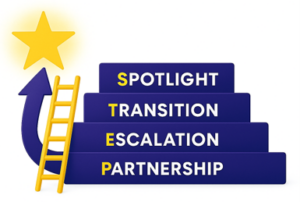
It combines:
- A clear, shared STEP framework for attendance
- A purposeful professional network across schools
- A disciplined cycle of data, systems and pupil experience
- Resources informed by evidence, including Anna Freud’s work on attendance and mental wellbeing
The intention is simple: to ensure that every school has strong, consistent systems in place, and that every pupil is supported to attend, belong and succeed. There will be six carefully sequenced sessions across the year, each focused on a key part of the school system:
- Attendance systems and data
- SEND and inclusion
- Pastoral leadership and intervention
- The role of tutors and classroom staff
- Whole-school culture and engagement
- Partnerships with families and external agencies
Each cycle will draw on attendance data, staff expertise and pupil experience, with a consistent rhythm of review, collaboration and refinement.
Secondary Attendance Network & Forum Key Content and Dates
- 20th October 2026, 9am – 12pm
- 26th January 2027, 9am -12pm
- 20th May 2027, 9am – 12pm
| Focus | Autumn Term 1 | Autumn Term 2 | Spring Term 1 | Spring Term 2 | Summer Term 1 | Summer Term 2 |
| Governance | Welcome / updates / minutes / actions Set purpose and priorities |
Welcome / updates / minutes / actions | Welcome / updates / minutes / actions | Welcome / updates / minutes / actions | Welcome / updates / minutes / actions | Welcome / updates / minutes / actions |
| Data (KPI / Performance) | Analyse attendance baseline (prior year, current trends) Identify PA, severe absence, key groups (SEND, FSM) Define priorities |
Review early trends (weekly patterns, cohorts) Link to barriers and pupil context |
Review mid-year data Track impact of interventions across STEP stages |
Mid-year KPI review Evaluate effectiveness of systems and support |
Updated data review Compare cohorts and impact of interventions |
Final evaluation of attendance outcomes Reduction in PA and gap analysis |
| Pupil Voice (Stakeholder Experience) | — | Gather pupil voice on barriers to attendance Focus: belonging, anxiety, routines |
— | — | Repeat pupil voice cycle Evaluate improvement in experience |
— |
| Practice (Monitoring / Systems) | Attendance systems review (registers, first-day response, Golden Hour) Attendance Officer focus |
Inclusion and SEND review EBSA, barriers, provision mapping |
Pastoral systems review Heads of Year, safeguarding, interventions |
Teaching staff contribution Form tutors, routines, classroom culture |
Whole-school culture Rewards, recognition, engagement |
Parental engagement and partnership Communication, multi-agency work |
| Professional Network – School Spotlight | School spotlight: attendance systems, data use (Attendance Officers) | School spotlight: SEND / EBSA support (SENCOs) | School spotlight: pastoral interventions (HoYs) | School spotlight: tutor and classroom practice | School spotlight: whole-school culture and rewards | School spotlight: parental engagement and case studies |
| Professional Network – Discussion / Training | Focused session: systems, processes, Kingfisher use | Focused session: inclusion, EBSA, barriers to attendance | Guided discussion: pastoral strategies and intervention impact | Focused training: role of tutors and classroom staff | Collaborative discussion: building culture and belonging | Strategic reflection: sustaining impact and partnership with families |
| Professional Network – Resource Sharing | Share systems, templates, scripts (calls, letters) | Share SEND support strategies and case studies | Share pastoral intervention models and tracking | Share tutor resources, routines and messaging | Share rewards systems and engagement strategies | Final attendance toolkit, including Anna Freud-informed resources |
| Professional Development | Training on systems, data and DfE expectations | Training on inclusion and mental wellbeing | Development of pastoral expertise and interventions | Development of classroom contribution to attendance | Development of culture and engagement | Review of practice and impact across roles |
| Collaboration (Between Meetings) | Set up shared platform (Teams / Drive) | Ongoing sharing of case studies and resources | Cross-school collaboration / visits (where appropriate) | Continued professional dialogue | Sharing refined practice across network | Consolidation of toolkit and shared practice |
| School Improvement (SIP / Strategy) | Define attendance priorities within SIP / STEP framework | Refine priorities based on pupil voice and barriers | Evaluate implementation and consistency of approach | Update strategy based on mid-year findings | Evaluate effectiveness of culture and engagement strategies | Final evaluation → next priorities |
| Outputs / Impact | Priorities agreed (PA, systems, cohorts) | Refined understanding of barriers and needs | Triangulated evaluation (data + voice + systems) | Mid-year impact review | Evidence of improved engagement and culture | Final evaluation report and attendance toolkit |
| Links to Governance (LGC / CTS) | LGC: KPI, attendance data CTS: baseline and strategy |
LGC: stakeholder engagement CTS: inclusion and wellbeing |
LGC: monitoring visits CTS: pastoral and safeguarding |
LGC: KPI update CTS: mid-year review |
LGC: stakeholder review CTS: culture and engagement |
LGC: final attendance outcomes CTS: evaluation and strategy |